
- Home
- About Us
- Our Team
- Awards And Memberships
- Philanthropic & Charity Works
- Hearing FAQs
- Testimonials
- Patient Stories
- Services
- Hearing Evaluations
- Hearing Aid Fittings
- Hearing Aid Repair/Maintenance
- Ear Plugs & Protection
- Cerumen Management
- Comprehensive Balance Evaluations
- Cochlear Implants
- Speech-In Noise Testing
- Hearing Aids
- Hearing Aid Styles
- Smart Hearing Aids
- Hearing Loss and Brain Health
- Financing
- Oticon
- Lyric
- Phonak
- ReSound
- Widex
- Starkey
- Signia
- Unitron
- Implantable Technology
- OTC
- Patient Resources
- Communication Training Program
- How The Ear Works
- Types Of Hearing Loss
- Promotions
- Patient Forms
- Videos
- Referring Physicians
- FAQ
- Online Hearing Test
- Pricing
- Blog
- Shop
- Delray Beach
- Boynton Beach
- Jupiter
- Events
- Contact Us
About Us
Services
Hearing Aids
Patient Resources
Our Locations
Hearing Evaluations in South Florida: Your Complete Guide to Better Hearing
Conversations should feel easy. A phone call, a grandchild's laugh, or dinner with friends should never leave you straining to catch every word. If they have started to, you are not alone and you are not without options.
At Hearing Partners of South Florida, we help adults throughout Delray Beach, Boynton Beach and Jupiter understand exactly how they hear today, so we can build a clear plan for how they can hear tomorrow. Our comprehensive hearing evaluation is a friendly, thorough and pain-free way to get real answers about your hearing health.
You do not need a referral to get started. You just need to take the first step.
Schedule your comprehensive hearing evaluation with Hearing Partners of South Florida today and find out exactly where your hearing stands.

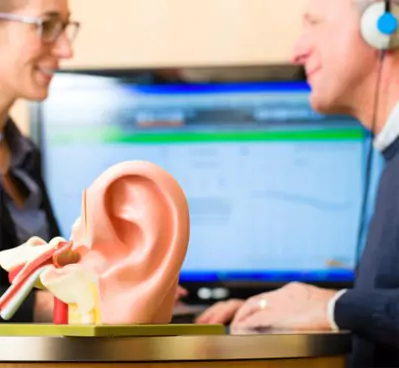
What Is a Hearing Evaluation?
A hearing evaluation is a detailed, professional assessment that measures how well you hear different sounds, pitches and speech patterns. It is performed by licensed hearing care professional using calibrated equipment in a controlled setting, so the results are accurate and reliable.
Think of it as a complete picture of your hearing health, similar to how an eye exam gives your optometrist a full picture of your vision. A hearing evaluation does not just tell you whether you have hearing loss. It tells you the type, the degree and which frequencies are affected, so any treatment plan can be built around your specific needs.
Who Needs a Hearing Evaluation?
Almost every adult can benefit from a baseline hearing evaluation, but some people should prioritize scheduling one sooner rather than later, including:
- Adults over the age of 50
- Anyone who has noticed changes in how well they understand speech
- People with a family history of hearing loss
- Those who have worked in loud environments, such as construction, music, aviation, or manufacturing
- Anyone experiencing ringing, buzzing, or humming in the ears
- People who have had ear infections, head injuries, or ototoxic medications in the past
- Anyone whose loved ones have mentioned they seem to be missing parts of conversations
Why a Hearing Evaluation Matters
Hearing loss usually happens gradually. Most people do not wake up one day unable to hear. Instead, it creeps in over months and years, so slowly that the brain adjusts and compensates without you realizing how much you have actually lost. A hearing evaluation catches these changes early, often before they become disruptive to daily life.
Hearing Screening vs. Comprehensive Hearing Evaluation
These two terms get used interchangeably, but they are not the same thing. Here is the difference in simple terms.
| Feature | Hearing Screening | Comprehensive Hearing Evaluation |
|---|---|---|
| Purpose | Quick pass or fail check | Full diagnostic picture of your hearing |
| Length | A few minutes | 20 to 60 minutes |
| Detail | Basic, general result | Specific results by ear, pitch, and volume |
| Performed by | Sometimes automated or non specialist | Licensed hearing care professional |
| Follow up | May recommend further testing | Provides treatment recommendations directly |
A screening can tell you that something might be wrong. A comprehensive evaluation tells you exactly what is happening and what to do about it.
Signs You May Need a Hearing Evaluation
Hearing changes are often noticed by the people around you before you notice them yourself. Family members frequently mention that the television volume keeps climbing or that conversations at restaurants have become harder to follow. These small signals matter.
Common Symptoms of Hearing Loss
- Struggling to follow conversations, especially in groups
- Turning the television or radio volume up higher than others prefer
- Frequently asking people to repeat themselves
- Ringing, buzzing, or humming in the ears, known as tinnitus
- Trouble understanding speech in restaurants, parties, or other noisy places
- Missing phone calls or struggling to understand callers
- Family members or friends pointing out that you seem to mishear things
- Pulling back from social situations because conversations feel exhausting
- Feeling off balance or unsteady, which can sometimes be connected to inner ear health
What Happens During the Appointment
Walking into a new type of medical appointment can feel intimidating, but a hearing evaluation is simple, comfortable and completely painless. Here is what your visit will look like, from arrival to results.
Step by Step: Your Hearing Evaluation Visit
- Check in and welcome. You will fill out a short form covering your health history and current concerns.
- Conversation with your provider. Your hearing care professional will ask about your symptoms, lifestyle, noise exposure and any specific listening challenges you are facing.
- Visual ear examination. Using a lighted instrument called an otoscope, your provider will look inside your ear canal to check for earwax buildup, infection, or any physical blockages.
- Hearing tests. You will sit in a comfortable, quiet testing booth or room and respond to a series of tones and words. This part typically takes 20 to 30 minutes.
- Review of results. Your provider will walk you through your results using an easy-to-understand chart called an audiogram.
- Recommendations and next steps. Based on your results, your provider will explain what they found and discuss any recommended next steps, whether that means monitoring, medical referral, or treatment options.
There are no needles, no discomfort and nothing invasive. Most patients say the hardest part is simply making the appointment. Once you are here, our team makes the rest easy.

Tests Included in a Comprehensive Hearing Evaluation
Every part of your evaluation serves a specific purpose. Here is what each test measures and why it matters, explained in plain language.
Case History Review
Before any testing begins, your provider talks with you about your hearing concerns, medical history, medications and lifestyle. This conversation helps guide which tests matter most for your situation.
Visual Ear Examination (Otoscopy)
Your provider looks into your ear canal with a lighted scope to check for earwax, fluid, or signs of infection. Sometimes what feels like hearing loss is actually just a blocked ear canal and this step rules that out early.
Pure Tone Audiometry
You will wear headphones and listen for a series of soft beeping tones at different pitches and volumes. You raise your hand or press a button whenever you hear a sound, even if it is very faint. This test maps out the quietest sounds you can hear at each pitch.
Air Conduction Testing
This measures how sound travels through your ear canal, eardrum and the tiny bones of the middle ear. It is performed through headphones and forms the foundation of your audiogram.
Bone Conduction Testing
A small device is placed behind your ear that sends gentle vibrations directly to your inner ear, bypassing the outer and middle ear entirely. Comparing this to air conduction results helps your provider figure out whether hearing loss is coming from the inner ear, the middle ear, or both.
Speech Recognition Testing
Instead of tones, you will listen to and repeat back words at a comfortable volume. This shows how well you understand speech, not just whether you can detect sound.
Speech in Noise Testing
Understanding speech in a quiet room is very different from understanding it in a noisy restaurant. This test plays speech against background noise to measure how well you can follow conversations in real-world, everyday listening environments.
Tympanometry
A soft probe is placed just inside your ear canal to measure how your eardrum moves in response to air pressure changes. This test checks for fluid, pressure problems, or issues with the tiny bones in your middle ear. It takes only a few seconds per ear.
Additional Testing, if Needed
Depending on your case history and initial results, your provider may recommend additional testing, such as otoacoustic emissions testing, or a referral to an ear, nose and throat physician for further evaluation.
Hearing Evaluation Tests at a Glance
| Test | Purpose | What It Measures | Time Required |
|---|---|---|---|
| Case history review | Understand your concerns and background | Symptoms, lifestyle, medical history | 5 to 10 minutes |
| Visual ear examination | Check for blockages or infection | Physical condition of ear canal and eardrum | 2 to 3 minutes |
| Pure tone audiometry | Find the softest sounds you can hear | Hearing sensitivity by pitch | 10 to 15 minutes |
| Air conduction testing | Measure sound through the outer and middle ear | Overall hearing pathway | Included in audiometry |
| Bone conduction testing | Pinpoint where hearing loss originates | Inner ear function | 5 to 10 minutes |
| Speech recognition testing | Measure understanding, not just detection | Word recognition accuracy | 5 to 10 minutes |
| Speech in noise testing | Test real world listening ability | Speech understanding with background noise | 5 to 10 minutes |
| Tympanometry | Check eardrum and middle ear function | Eardrum movement and pressure | 1 to 2 minutes per ear |
How to Prepare for Your Hearing Evaluation
A little preparation helps your provider get the clearest possible picture of your hearing health. Here is what to do before your visit.
Before Your Appointment
- Write down when you first noticed hearing changes and how they have progressed
- List any medications you currently take, including over-the-counter drugs and supplements
- Gather results from any previous hearing tests, if you have had one before
- Think about specific situations where hearing feels hardest, such as on phone calls or in restaurants
- Note any family history of hearing loss
- Write down any questions you want to ask your provider
What to Bring
- A list of current medications
- Your insurance card, if applicable
- Any prior audiograms or hearing test results
- A family member or trusted friend, if you would like support
What to Avoid
- Avoid using cotton swabs to clean your ears right before your appointment, since this can push wax deeper.
- Avoid attending loud concerts or using power tools without hearing protection in the days before your test, since temporary noise exposure can skew results.
- Do not skip your case history questions, even if they seem unrelated to hearing.

Understanding Your Hearing Evaluation Results
After testing, your provider will walk you through your results using a chart called an audiogram. This can feel like reading a foreign language at first, so let's break it down simply.
What Is an Audiogram?
An audiogram is a graph that plots two things: pitch, measured in hertz, running left to right and volume, measured in decibels, running top to bottom. Your results are marked on this graph for each ear, showing the softest volume you can hear at each pitch.
Understanding Hearing Levels
Hearing levels are generally grouped into categories, based on the softest sounds a person can detect.
| Hearing Level | Decibel Range | What It Means in Daily Life |
|---|---|---|
| Normal hearing | -10 to 25 dB | You can hear soft sounds and whispers clearly |
| Mild hearing loss | 26 to 40 dB | Soft speech or distant conversations become hard to catch |
| Moderate hearing loss | 41 to 55 dB | Normal conversation volume becomes difficult without help |
| Moderately severe hearing loss | 56 to 70 dB | Conversations are hard to follow even at close range |
| Severe hearing loss | 71 to 90 dB | Only loud speech or sounds are detectable |
| Profound hearing loss | 91 dB or greater | Very little or no sound is detected without amplification |
What Happens Next
Your provider will explain exactly where your results fall and what that means for your specific lifestyle. From there, they will walk you through recommended next steps, which might range from simple monitoring to exploring treatment options. Nothing is one size fits all. Your plan is built around your ears, your goals and your daily life.
Common Causes of Hearing Loss
Understanding why hearing loss happens can help you take steps to protect the hearing you have.
Age Related Hearing Loss
Age is one of the most common factors connected to hearing changes. Research shows that hearing loss becomes noticeably more common with each passing decade of adulthood, particularly after age 50. This gradual, age related hearing loss is known clinically as presbycusis.
Noise Induced Hearing Loss
Repeated exposure to loud sounds, whether from work, hobbies, or entertainment, can damage the delicate hair cells inside the inner ear over time. Unlike some other causes, noise induced hearing loss is often preventable with proper hearing protection.
Ear Infections
Frequent or untreated ear infections, especially earlier in life, can sometimes lead to lasting changes in hearing.
Genetics
Family history plays a real role in hearing health. If your parents or grandparents experienced hearing loss, you may be more likely to experience it as well.
Medications
Certain medications, known as ototoxic drugs, can affect hearing as a side effect. This is one reason your provider will always ask about your current medication list.
Earwax Buildup
Sometimes what feels like hearing loss is simply excess earwax blocking the ear canal. This is one of the most easily treatable causes of hearing changes and it is checked during every evaluation.
Medical Conditions
Conditions such as diabetes, high blood pressure and cardiovascular disease have all been linked to changes in hearing health since healthy blood flow matters for the inner ear.
Head Injuries
Trauma to the head or ears can sometimes result in temporary or permanent hearing changes, depending on the severity and location of the injury.
Prevention Tips
- Wear hearing protection around loud noises, including power tools, concerts and firearms
- Keep the volume moderate when using headphones or earbuds
- Manage chronic health conditions like diabetes and blood pressure with your physician
- Schedule regular hearing evaluations, especially after age 50
- Avoid inserting objects like cotton swabs into your ear canal
Why Early Detection Matters
Catching hearing changes early opens up more options and generally leads to a smoother adjustment period. Here is why early detection is worth prioritizing.
Better Communication
Addressing hearing loss early helps preserve your ability to follow conversations naturally, without the extra effort that untreated hearing loss can require.
Brain Health
Your brain relies on clear sound input to process speech and language. When hearing loss goes untreated for a long time, the brain receives less auditory stimulation, which some research suggests may be connected to increased cognitive strain over time.
Safety
Hearing plays a role in awareness of your surroundings, from hearing a car horn to hearing a smoke alarm. Addressing hearing loss can support overall safety and independence.
Work Performance
Clear hearing supports better communication in meetings, phone calls and day-to-day workplace interactions.
Family Relationships
Many patients tell us that improved hearing means more relaxed, natural conversations with spouses, children and grandchildren, without the frustration of constantly asking others to repeat themselves.
Improved Quality of Life
Overall, addressing hearing loss early tends to support a fuller, more connected daily life, from social gatherings to quiet moments at home.
Better Treatment Outcomes
The earlier hearing loss is identified, the more treatment options are typically available and the easier the adjustment tends to be.
Next Steps after Your Evaluation
Every recommendation we make is based on your specific results and your personal goals. Depending on what your evaluation shows, your provider may suggest one or more of the following.
Monitoring
If your hearing falls within a normal range or shows only very mild, early changes, your provider may recommend simply monitoring your hearing with a follow-up evaluation in the future.
Earwax Removal
If earwax buildup is affecting your hearing or your test results, your provider can safely remove it right in the office.
Medical Referral
If your evaluation reveals a medical condition that needs attention, such as an infection or a structural issue, your provider will refer you to an appropriate physician, such as an ear, nose and throat specialist.
Hearing Protection
If your evaluation shows early signs of noise-related changes, your provider may recommend custom hearing protection to prevent further damage.
Hearing Aids
If your evaluation shows hearing loss that would benefit from amplification, your provider will discuss appropriate hearing aid options based on your degree of hearing loss, lifestyle and personal preferences.
Communication Strategies
Simple strategies, like facing the person you are speaking with or reducing background noise, can meaningfully improve everyday communication and are often recommended alongside other treatment.
Follow Up Appointments
Hearing health is not a one-time checkup. Your provider will recommend a follow up schedule that fits your specific situation, so any changes can be caught and addressed early.
Why Choose Hearing Partners of South Florida
Choosing a hearing care provider is a personal decision and we do not take that trust lightly.
- Experienced Providers: Our team is made up of licensed hearing care professionals who focus specifically on hearing health, so you are getting evaluated by people who understand hearing in real depth.
- Personalized Care: We do not believe in one size fits all recommendations. Every evaluation, every conversation and every treatment plan is built around your specific hearing, lifestyle and goals.
- Modern Technology: We use modern, calibrated diagnostic equipment to make sure your results are accurate and reliable, giving you and your provider a true picture of your hearing health.
- Patient Education: We believe informed patients make better decisions. Your provider will take the time to explain your results clearly, answer your questions and make sure you understand your options before moving forward with anything.
- Compassionate Service: Hearing changes can feel personal and sometimes a little vulnerable to talk about. Our team approaches every appointment with patience, warmth and respect.
- Comfortable Environment: Our offices in Delray Beach, Boynton Beach and Jupiter are designed to feel welcoming and relaxed, not clinical or intimidating.
- Long-Term Hearing Support: We are not focused on a single appointment. We are focused on building a long-term relationship with you, so your hearing health is supported for years to come.
- Community Commitment: As a local South Florida practice, we are proud to serve the communities of Delray Beach, Boynton Beach, Jupiter and the surrounding areas with accessible, trustworthy hearing care.
Take the First Step toward Clearer Hearing
You do not need to wait until hearing loss becomes disruptive to take action. A comprehensive hearing evaluation gives you real answers, in a comfortable setting, with a provider who takes the time to explain everything clearly.
Whether you are simply curious about your hearing health or have noticed changes that concern you, Hearing Partners of South Florida is here to help. Our team proudly serves Delray Beach, Boynton Beach, Jupiter and the surrounding South Florida communities with personalized, compassionate hearing care.
Schedule your comprehensive hearing evaluation today and take the first step toward hearing the people and moments you care about most, clearly.
